



Ethiopia Guji Kercha Wine Process
| Harvest Season | 2024/25 | Status | Spot |
|---|---|
| Lot Number | P8002870-2 |
| Warehouse | Liverpool, UK |

About This Coffee

The Region
Guji is one of the zones of the Oromia Region of Ethiopia. Guji is named after a tribe of the Oromo people. Guji is bordered on the south by Borena, on the west by the Southern Nations, Nationalities, and Peoples Region, on the north by the Ganale Dorya River which separates it from Bale and on the east by the Somali Region. The highest point in this zone is Mount Dara Tiniro. Cities and major towns in this Zone include its administrative center, Negele. The Guji Zone was created in September 2002, when the upland woredas of the Borena Zone were split apart to create it.
The Process
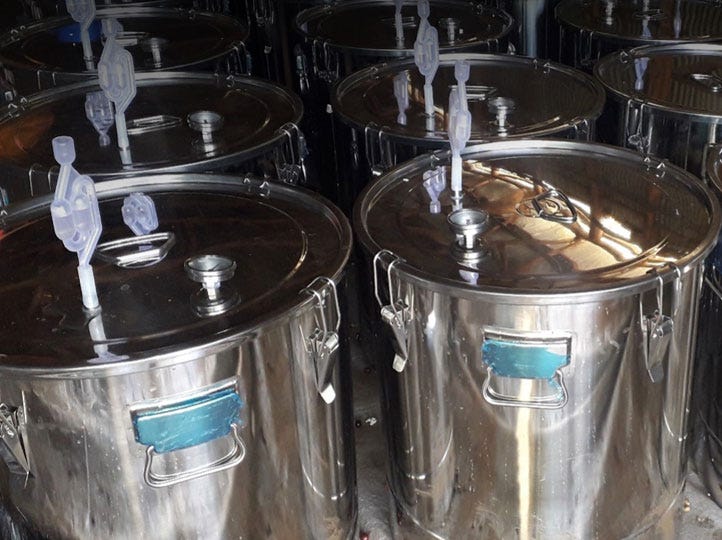
This wine process is so-called because the techniques involved have been borrowed from the wine industry, though similar techniques can be found in many products derived from controlled fermentation. In summary, coffee cherries are fermented in sealed, oxygen deprived, stainless steel tanks with careful monitoring of temperature.
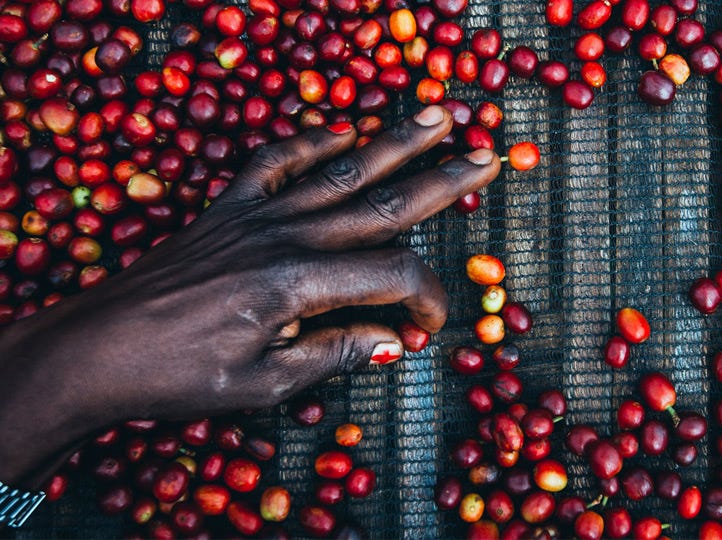
Firstly, cherries are sorted to select only the ripest for processing. The cherries are then placed in a stainless steel tank (pictured) with a specialised fermentation valve part filled with water. As the fermentation process begins, CO2 is released and builds up in the tank. Once the internal pressure of the tank exceeds the atmospheric pressure, the CO2 will push through the water in the valve as individual bubbles. The valve prevents any air entering the tank from the outside, allowing for extended fermentation whilst reducing the risk of spoilage and negative fermented flavours.
Fermentation time is dictated by the temperature readings inside the tank, but typically the process lasts for 4-5 days, after which the cherries are dried in the traditional way: on raised African beds for 15 - 18 days. Once the cherries have sufficiently dried they are rested before being transported to a central dry mill in Addis Ababa for secondary processing (hulling, grading, sorting and handpicking)Djibouti.
- Subregion Banko Michicha, Kercha District, Guji zone
- Producer Type Small Holder Farmers
- Processing Natural/Dry Processed
- Processing Description Natural with yeast-assisted controlled fermentation
- Bag Types Grain Pro / Ecotact
- Plant Species Arabica
- Variety Ethiopia Heirloom
- Min Growing Altitude 1900m
- Max Growing Altitude 2050m
- Screen Size 14 Up
- On Sale No
- Top Lot Yes
- Price Per Kg £13.00
- Status Spot
- Coffee Grade ETH CA NAT GUJ G1
- CTRM Contract Number P8002870-2
- Origin Ethiopia
- Warehouse Covoya Nano