India, Where Coffee Came of Age
Indian green coffee is stepping onto the specialty stage with new energy, driven by producers who are embracing innovation in harmony with tradition. At the forefront is Ratnagiri Estate, where experimental post-harvest processing techniques are pushing the boundaries of flavour and quality. For specialty coffee roasters seeking distinctive profiles and a reliable source of traceable, high-quality green coffee, India now offers far more than its long-standing reputation for Monsoon Malabar and Robusta. But where did it all begin?
The True History of Coffee in India
The context of this story is fiction, but the essential circumstances are not. If we sometimes wonder at the passion that is pervasive among those in the coffee industry, we need only look at the history of coffee to see that we are not alone. The history of coffee is filled with drama, sedition, and intrigue, and smugglers have played an important role throughout. If coffee was born in Ethiopia and grew up in Yemen, then it left home to make its own way in the world and "come of age" through India in the 17th Century, when Baba Budan, returning from a pilgrimage to Mecca, smuggled seven beans and planted them in hills of the Chikamagaluru district, a hill region now known as Baba Budan Giri.
There is some uncertainty about whether or not Baba Budan (sometimes Bababudan) planted his seven beans before the Dutch, also in the smuggling business, planted beans in Sri Lanka. The Dutch, however, make no claim that their beans were magic, as Baba’s seven smuggled beans are sometimes said to have been. Coffee cultivation grew slowly in India and the first formal plantations were established by the British in 1840 in the same region where the first coffee was planted. In typical British colonial style, plantations multiplied rapidly.
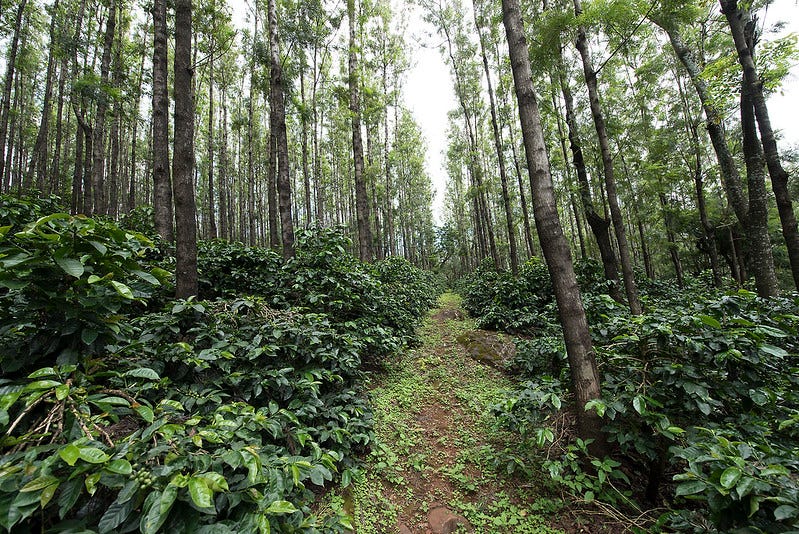
Over the years, repeated battles with leaf rust and an emphasis on yield caused India to increase planting Robusta and prioritize shade growing conditions. Today, India grows more than twice as much Robusta as Arabica and nearly all coffee is grown under shade, much of it in forest conditions. Increasing through the years, in 2024, over 27% of India’s coffee was exported to Italy, where Robusta has long been a part of traditional espresso blends. The government began to exercise control over the coffee industry just prior to independence in the early 1940’s. Like many past government programmes in coffee growing countries, coffee was managed as an undifferentiated commodity and trade controlled based on volume. In a familiar story, yield was viewed as more important than quality and quality suffered for fifty years. In the 1990’s the government returned control of marketing and selling coffee to producers. Not only did quality begin to improve, but production increased by 30% in the 90’s.
Coffee Consumption Today
As quality improved, India experienced a significant increase in coffee consumption, which has more than doubled over the last 25 years, accompanied by dramatic growth in the number of coffeehouses. In 2002, India was the first coffee producing country to make it to the finals in the World Barista Championships, placing third and then fifth the following year.
But the journey to producing specialty grades that will attract coffee buyers around the world has been slow. While Italy receives 27.9% of India’s exports, the combined share of Europe and major exporting countries was the highest in 2024, about 51%. For a long time, India was regarded by the specialty coffee industry as a Robusta producer almost exclusively. Now, exporters like our partner ofi and farms such as Ratnagiri Estate are working to change that.
Coffee farms in India are home to abundant wildlife, including tigers and elephants, because of the forest-like conditions. Compared to shade grown coffee in other parts of the world, coffee in India is grown in dense shade conditions, and almost intercropped with peppercorn, cardamom, areca nut, oranges, bananas, and other crops. By law, those who work on coffee farms must be paid minimum wage. Though the system for determining this wage in different sectors is complex, coffee workers in India tend to make more than the world-wide average. They also receive child care, maternity leave, free housing, and pensions.

Ashok Patre and Ratnagiri Estate
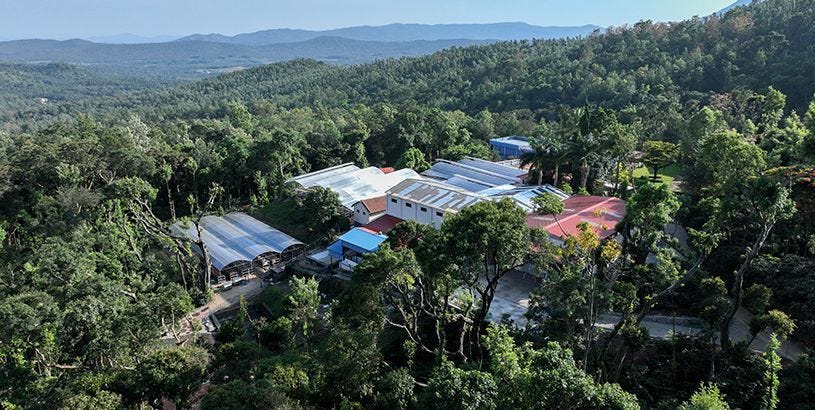
High in the Western Ghats of Karnataka - in the same hills where legend says Baba budan planted his magic beans - sits a coffee farm unlike any other: Ratnagiri Estate. Its Hindi name translates literally to Pearl Mountain, a reference to the dense silver oak canopy which crowns the land. Established in 1920, the estate has been passed down through three generations, evolving from a traditional farm into a hub of innovation in Indian specialty coffee, now led by its current owner, Ashok Patre.
What began as a family-owned farm rooted in tradition has grown into a pioneering estate that bridges heritage with forward-thinking practices. Ashok, who inherited Ratnagiri from his father and grandfather, carries deep respect for the methods they passed down. “Even though we are using modern techniques and equipment for coffee processing,” he explains, “I am still carrying out many of the farm operations like what my grandfather and father used to do. One example will be shade regulation which is very important to produce a significantly higher yield.”
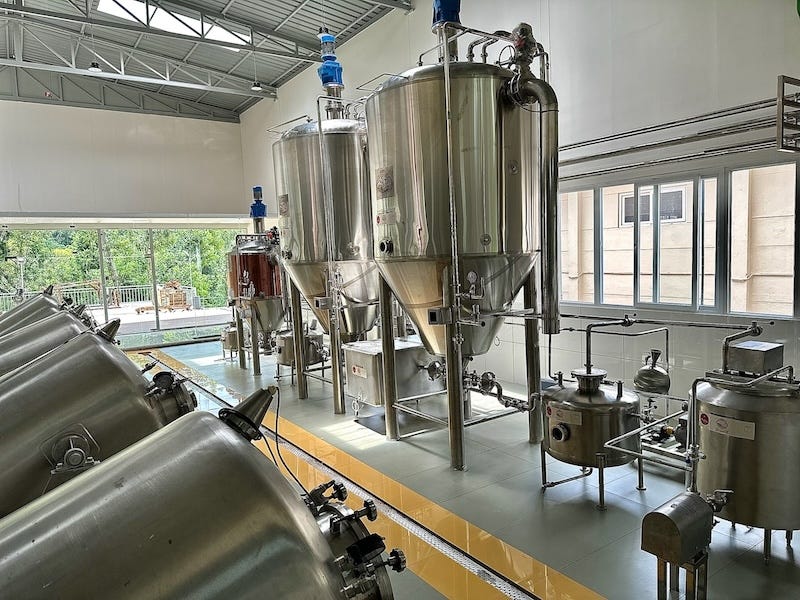
At the same time, Ashok is committed to pushing Indian coffee forward. Ratnagiri has become a hub of experimentation, combining long-standing farming knowledge with modern laboratory equipment. Of his recent work, he says, “Our Lab Sequential Ferment process is the most exciting as it can bring about a burst of new flavours as we can control the fermentation with the use of our bio-reactors. The Hemavathi and Chandragiri varieties look the most promising as they are quite disease resistant and produce a very good cup profile.”
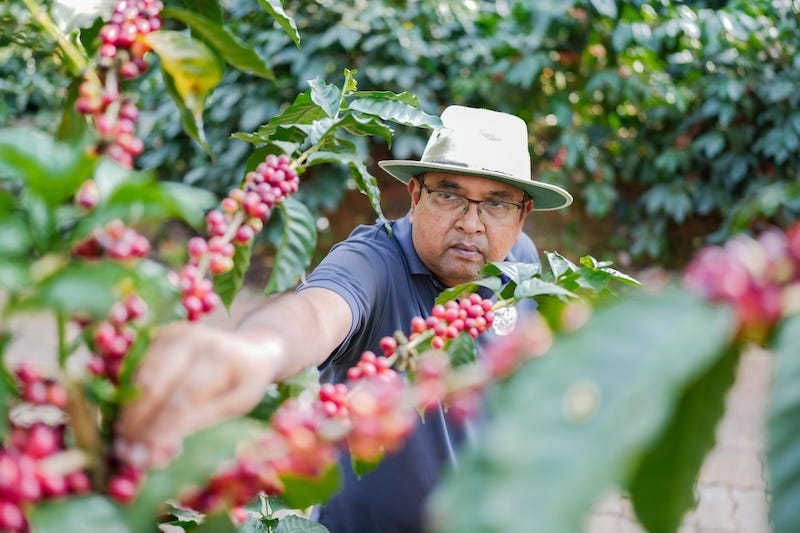
The estate produces a wide range of coffees, from natural and honey-processed lots to experimental fermentations that push the boundaries of what Indian coffee can be. Ashok leads the way in anaerobic fermentation, carbonic maceration, and even inoculation with lab-grown yeasts and bacterial cultures.
Sustainability lies at the core of Ratnagiri’s identity. The estate is both biodynamic and Rainforest Alliance–certified, treating the land as a living, self-sustaining ecosystem. Quarterly soil testing helps the team monitor soil health, while natural treatments like seawater and seaweed extracts are applied to boost plant immunity and enhance sugar levels in the fruit. Yet, producing specialty coffee in India is not without its challenges. “The most challenging part of producing specialty coffee in India is climate change,” Ashok notes, “and it has made producing excellent coffees very hard as we are not able to dry the coffee under the right conditions and also the availability of a skilled workforce who can understand the intricacies of producing specialty coffee.”
Despite these hurdles, Ratnagiri continues to thrive, balancing tradition and innovation while setting a benchmark for Indian coffee on the global stage.
If you haven’t tried coffee from India, you’re missing out. Known for its fully body and spicy flavors, Indian coffee traditionally possesses notes of cardamom, clove, pepper, and nutmeg, depending on the variety. With advances in agronomy and post-harvest processing techniques, the landscape of potential sensory experiences is vast. To find out even more about Ratnagiri Estate, follow them on Instagram @ratnagiri_estate.
If you haven’t tried coffee from India, you’re missing out. Known for its fully body and spicy flavors, Indian coffee traditionally possesses notes of cardamom, clove, pepper, and nutmeg, depending on the variety. With advances in agronomy and post-harvest processing techniques, the landscape of potential sensory experiences is vast. To find out even more about Ratnagiri Estate, follow them on Instagram @ratnagiri_estate.